
What’s Known
Generally, human immunodeficiency virus (HIV)-positive patients are susceptible to various infections, including gingivitis and dental infections. Actinomycetes such as Nocardia and Streptomyces species can create resistant infections in these patients. Nowadays, resistance of actinomycetes to routine antimicrobials is rapidly increasing globally.
What’s New
The current study showed that actinomycetes (filamentous bacteria) of Nocardia (2.9%) and Streptomyces (2.4%) were highly prevalent in patients infected with HIV in Tehran, Iran. The isolates were susceptible to cotrimoxazole and resistant to penicillin G, tetracycline, amoxicillin, and erythromycin.
Introduction
Human immunodeficiency virus (HIV) remains a major global health challenge, affecting about 38 million people worldwide. 1 This retrovirus spreads through contaminated body fluids such as blood and sexual secretions, entering host cells via CD4 receptors and co-receptors including CCR5 or CXCR4. 2 Its primary targets are CD4+ T-lymphocytes, which are progressively destroyed during viral replication. Without treatment, the gradual depletion of these cells leads to acquired immunodeficiency syndrome (AIDS), leaving patients highly susceptible to opportunistic infections and cancers. Even with antiretroviral therapy (ART), individuals with HIV face increased risks of systemic comorbidities and oral complications, including mucosal inflammations, periodontal disease, and opportunistic infections. Moreover, HIV alters the microbiome, sustaining chronic low-grade inflammation. This shift contributes to non-HIV-related diseases and explains higher rates of dental caries and oral inflammation in HIV-positive patients on ART. 3
The oral microbiome, an essential component of the human total microbiome, consists of a wide variety of microorganisms such as bacteria, fungi, viruses, mycoplasmas, and protozoans. Bacteria dominate the oral microbiome with over 700 species identified to date. This microbiome plays vital roles in human physiology, metabolism, and immunity, contributing to the prevention of pathogen colonization, maintaining pH balances, regulating oral immunities and supporting nitrate metabolism in saliva. 4 The oral microbiome of humans is primarily composed of six major bacterial phyla of Bacteroidetes, Firmicutes, Actinobacteria, Proteobacteria, Fusobacteria, and Spirochaetes. 4 , 5 Oral microbiota homeostasis can be affected by several factors such as smoking, diet, and medication. Additionally, changes in salivary components, immune responses, and physiological structures of the oral mucosa may lead to microbial dysbiosis. 6 Salivary composition changes in HIV infection may play critical roles in oral microbiome dysbiosis, with saliva containing secretory components critical for oral homeostasis. 7 , 8
Examples of the switched bacteria in HIV-infected patients include filamentous bacteria or actinomycetes such as Actinomyces, Streptomyces, and Nocardia. Actinomyces belongs to the Actinomycetes class, including species that are Gram-positive, facultative anaerobes and capable of producing endospores. 9 Actinomyces spp. are commonly involved in infections following dental procedures and abscesses in the mouth. 10 Generally, Actinomyces species are detected in soils and plants with no established human-to-human or zoonotic transmission, and identified occupational risk factors. 11 Another species, Streptomyces, includes the largest genus in the Actinomycetota phylum and the prototype genus of the Streptomycetaceae family. More than 700 species have been described for Streptomyces. Similar to other members of Actinomycetota, Streptomyces is Gram-positive with a large genome and high GC content. Similarly, this genus is typically detected in soils and decaying plant materials. Most Streptomyces species are recognized for producing volatile metabolites such as geosmin. 12 , 13 However, this genus can opportunistically cause infections and abscesses. Nocardia is another genus of Gram-positive filamentous/rod-shaped bacteria. 14 , 15 Various Nocardia species are opportunistic pathogens with low virulence, especially in people with weakened immune systems, such as HIV patients. 16 , 17 The overall importance of infections caused by filamentous bacteria, especially in immunocompromised individuals such as those with HIV, is complicated by the increased susceptibility of these people to acute and chronic suppurative infections due to their use of immunosuppressive drugs. Due to the lack of sufficient information on these pathogens in HIV patients in Tehran, Iran, the present research study was carried out to assess the prevalence and antibiotic susceptibility of filamentous bacteria in the oral cavities of HIV-positive patients in the addressed region.
Materials and Methods
Study Design and Setting
The present cross-sectional study was carried out in Shahid Ahmadi Clinic, southern Tehran, 2023–2024. This clinic was a referral center for HIV-positive patients, providing a comprehensive setting to assess oral microbiological profiles. The present research study was carried out based on the Declaration of Helsinki (https://www.wma.net/policies-post/wma-declaration-of-helsinki) as ethical principles of medical research studies involving humans. First, the study concept and benefits were explained to the participants, and then written informed consents were signed by all the participants. All personal information was suggested as confidential with very limited access to authorized personnel only. Furthermore, this study was ethically approved by the Ethics Committee, Tehran University of Medical Science (approval no. IR.TUMS.SPH.REC.1402.112, issued on 09/07/2023).
Population and Inclusion Criteria
The study enrolled 205 HIV-positive patients, aged 18 years and older, who had no prior antimicrobial use within 2 weeks of sampling. Exclusion criteria included individuals with systemic conditions unassociated with HIV that could affect oral microbiota, including diabetes or autoimmune diseases.
Sample Collection
Oral swab samples were collected from all participants under sterile conditions using commercially available swab kits. Samples were collected from multiple oral sites, including buccal mucosa, tongue, and gingival crevices, to maximize bacterial recovery. Samples were immediately transferred into transport media and then carried to the laboratory under cold chain conditions to preserve bacterial viability.
Sample Size Calculation
Sample size was calculated using statistical formulas based on the anticipated prevalence rate of filamentous bacteria in HIV-positive patients, ensuring sufficient power for statistical analysis. A confidence level of 95% and a margin of error of 5% were used in the calculation.
Oral hygiene
The questionnaires provided to the participants included a set of questions about oral health, such as dental visits and tooth brushing routines.
Bacterial Culture
Samples were inoculated onto blood agar (Merck, Germany) and thioglycolate media (Merck, Germany) and then incubated at 37 °C for 48 hour under aerobic and anaerobic conditions. Colony morphologies, hemolysis patterns, and pigmentations were recorded.
Microscopy
Gram staining was carried out to identify filamentous structures. Samples with branching, beaded, or fungal-like structures were used in further biochemical analyses.
Biochemical Identification
Catalase, oxidase, and nitrate reductase assays (Merck, Germany) were used to differentiate filamentous bacterial species.
Molecular Identification
In this study, deoxyribonucleic acid (DNA) molecules of the bacterial isolates were extracted via the phenol-chloroform method using commercial genome extraction kits (SinaClon, Iran). Quality and concentration of the extracted DNA were verified using spectrophotometry (A260/A280 ratios) (BioRad, USA) and electrophoresis in agarose gels (SinaClon, Iran). Polymerase chain reaction (PCR) was carried out using primers specific for 16S rRNA (ribosomal ribonucleic acid) gene and PCR master mix (Amplicon, Denmark). Sequences of the primers were as follows: 27F: 5’-AGAGTTTGATCCTGGCTCAG-3’ and 1492R: 5’-TACGGGTACCTTGTTACGACTT-3’. Negative controls included sterile pure water instead of template DNA. Reaction conditions in the PCR machine (BioRad, USA) generally included initial denaturation at 94 °C for 1 min, which was followed by 35 cycles of denaturation (94 °C, 30 s), annealing (60 °C, 60 s), and extension (72 °C, 90 s). Final extension was carried out at 72 °C for 10 min. Amplicons were visualized under UV (BioRad, USA) after agarose gels were electrophoresed and then stained with ethidium bromide (EtBr). Then, sequencing of 16S rRNA regions of the amplicons was carried out using commercial purification kits, universal bacterial primers, and the Sanger method to molecularly verify the isolates at species-levels. First, the sequencing raw data were processed using bioinformatics software as well as online tools such as BLAST (https://blast.ncbi.nlm.nih.gov/Blast.cgi), and then clean sequences were aligned to those from genomic databases such as GenBank (https://www.ncbi.nlm.nih.gov/genbank) for evolutionary analysis using the genetics software of MEGA X (https://www.megasoftware.net) and Figtree (http://tree.bio.ed.ac.uk/software/figtree). Phylogenetic trees were plotted based on the neighbor-joining method using bootstrap values of 1000.
Antimicrobial Susceptibility Testing (AST)
In this study, the disk diffusion method and Muller-Hinton agar (Merck, Germany) were used to assess antimicrobial susceptibility of the isolates. Standard antimicrobial disks were purchased from Padtan Teb, Iran. The assessed antimicrobials included penicillin G (PEN, 10 IU), tetracycline (TET, 30 mg), amoxicillin (AML, 30 mg), erythromycin (E, 15 mg), and trimethoprim-sulfamethoxazole (cotrimoxazole) (TS/SXT, 23.75/1.25 mg) based on the guidelines from Clinical and Laboratory Standards Institute (CLSI, USA). 18 , 19 Results were categorized as susceptible, intermediately resistant, or resistant based on the zones of inhibition (halos). 20 , 21
Statistical Analysis
Demographic data, clinical histories, and laboratory results were recorded using standardized forms. Statistical analyses were carried out using SPSS software v. 26.0 (IBM, USA). Chi square test was used to demonstrate associations between the bacterial prevalence rates and demographic variables. Generally, P values of 0.05 or less were reported as statistically significant.
Results
Demographic Information
Out of the 205 participants (152 males and 53 females), a majority of the participants, 130 (63%), were included within the age group of 41–60 years. Data revealed that the highest infection rate belonged to the 41-60 year age group, accounting for 130 participants (approximately 63% of the total sum) followed by the 21-60 year age group with 59 participants (29%). In contrast, age groups under 20 and over 60 y old collectively included 16 participants (8%). However, these findings were not statistically associated with the prevalence of the filamentous bacteria in these patients (95% CI=3.0–9.4%, P=0.02887). The findings revealed that the majority of participants, 112 individuals (54.6%), had poor oral hygiene. In comparison, 48 participants (23.4%) demonstrated moderate hygiene, and 44 (21.5%) showed good hygiene. Particularly, only one participant (0.5%) had excellent oral hygiene.
Prevalence of Filamentous Bacteria
Filamentous bacteria were identified in 11 patients, which represented 5.3% of the total study population, including Nocardia farcinica, 2.9% (six patients), and Streptomyces spp., 2.4% (five patients). The highest prevalence of the bacteria was reported in males (74.1%) and patients aged 41-60 years. In general, Chi square test results for the filamentous bacteria showed significant relationships with drug-linked complications (P=0.0041). Moreover, Chi square test result for N. farcinica demonstrated statistically significant relationships with age (95% CI=1.3–6.3%, P=0.0498), number of children (95% CI=1.0–5.6%, P=0.0498), and smoking (95% CI=1.0–5.6%, P=0.0498). Reports on smoking and the increased prevalence of filamentous bacteria highlighted the roles of lifestyle factors in disease susceptibility. The clinical metadata of the patients with orally isolated filamentous bacteria in the current study are listed in table 1.
| No. | CD4 (cell μl-1) | ART therapy | Antibiotic therapy | Smoking | Oral manifestation | Dental procedure |
|---|---|---|---|---|---|---|
| 1 | 570 | Yes | No | Yes | Infection, inflammation, bad smell, dental loss, dental caries | No |
| 2 | 606 | Yes | No | Yes | Decreased appetite, weight loss | Yes |
| 3 | 488 | Yes | No | Yes | No symptoms | Yes |
| 4 | 313 | Yes | Yes | No | Infection, inflammation, dental loss, and enamel stain | No |
| 5 | 829 | Yes | No | Yes | No symptoms | Yes |
| 6 | 268 | Yes | Yes | Yes | Infection, dental caries, dental loss, weight loss, | No |
| 7 | 935 | Yes | No | No | No symptoms | Yes |
| 8 | 780 | Yes | No | Yes | Bad smell, decreased appetite, night sweats | |
| 9 | 560 | Yes | Yes | Yes | Infection, bad smell, fever | No |
| 10 | 627 | Yes | No | Yes | No symptoms | Yes |
| 11 | 218 | Yes | Yes | Yes | Infection, inflammation, bad smell, fever, and weight loss | No |
| ART: Antiretroviral therapy | ||||||
Biochemical Identification of Nocardia and Streptomyces Species
In this study, various biochemical assays, such as utilization of substances (nitrate, L-arabinose, D-glucose, D-xylose, rhamnose, sorbitol, cellobiose, urea, gelatin, casein, and tyrosine), were used to identify the bacterial genera (table 2).
| Nitrate | L-arabinose | D-glucose | D-xylose | Rhamnose | Sorbitol | Cellobiose | Urea | Gelatin | Casein | Tyrosine | Bacteria | Patient Code |
|---|---|---|---|---|---|---|---|---|---|---|---|---|
| + | + | + | + | - | - | - | + | + | + | + | Nocardia | 92/199 |
| + | + | + | + | - | - | - | + | + | + | + | Streptomyces | 01/295 |
| + | + | + | + | - | - | - | + | + | + | + | Nocardia | 98/191 |
| + | + | + | + | - | - | - | + | + | + | + | Nocardia | 92/137 |
| + | + | + | + | - | - | - | + | + | + | + | Streptomyces | 92/125 |
| + | + | + | + | - | - | - | + | + | + | + | Streptomyces | 91/29 |
| + | + | + | + | - | - | - | + | + | + | + | Streptomyces | 90/51 |
| + | + | + | + | - | - | - | + | + | + | + | Nocardia | 90/15 |
| + | + | + | + | - | - | - | + | + | + | + | Nocardia | 87/154 |
| + | + | + | + | - | - | - | + | + | + | + | Streptomyces | 92/102 |
The 16S rRNA Gene Amplification
In general, 16S rRNA gene amplification results showed sharp, well-separated bands in the electrophoresed gels (figure 1). Amplicons were sequenced, and results were used for the molecular identification of the isolates to species level. Then, sequences were annotated to GenBank as follows. PQ600822 (N. farcinica), PQ600823 (N. farcinica), PQ600828 (N. farcinica), PQ634379 (N. farcinica), PQ634819 (N. farcinica), PQ600879 (Streptomyces sp.), PQ621735 (Streptomyces sp.), PQ621739 (Streptomyces sp.), PQ633383 (Streptomyces sp.), PQ634321 (Streptomyces sp.), and PQ634341 (Streptomyces sp.).
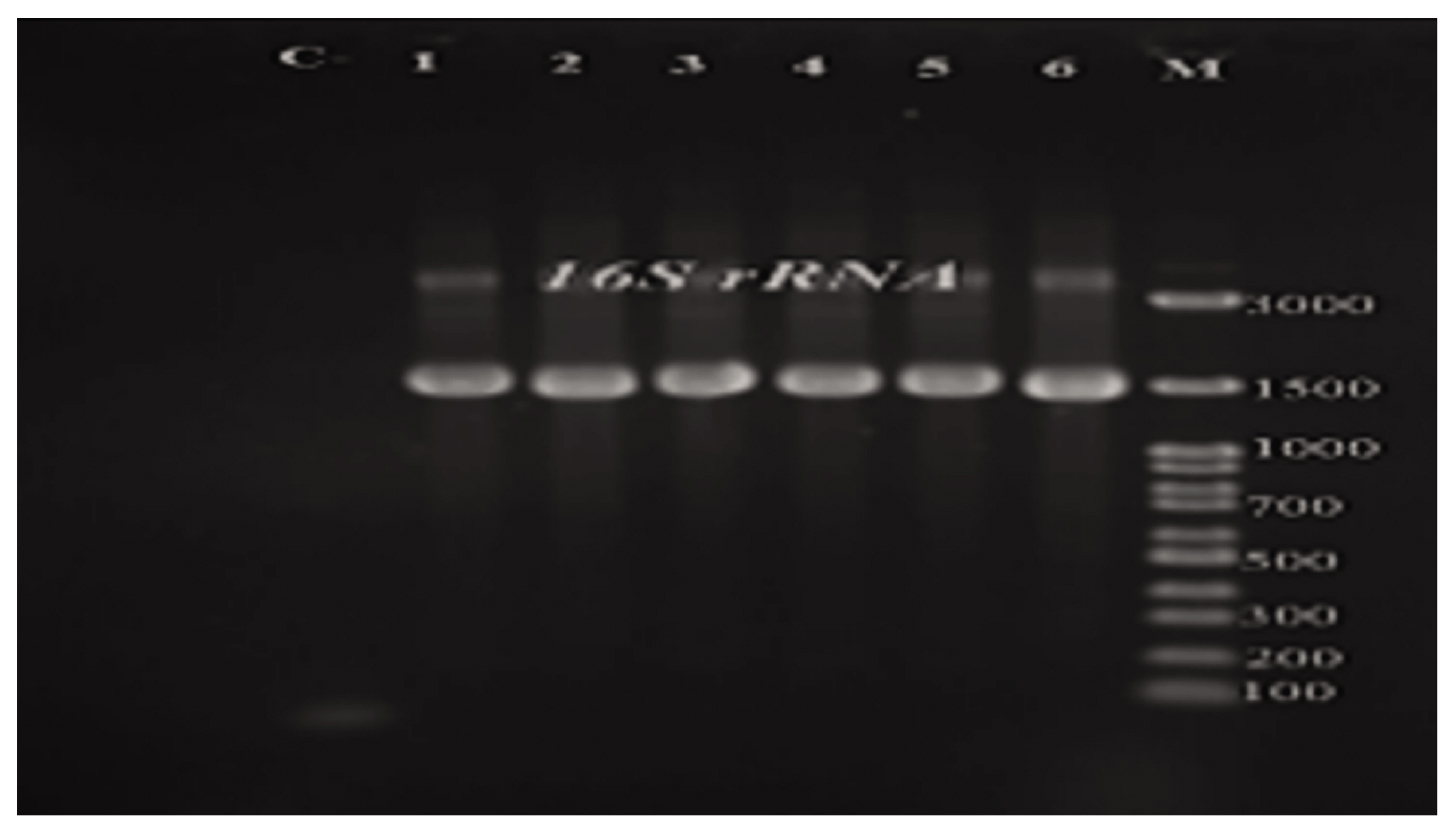
Figure 1. Agarose-gel electrophoresis results are present for 16S rRNA genes, including C-, negative control; Lanes 1, 2, 3, 4, 5, and 6, 1500-bp PCR products; and M, 100-bp DNA ladder
Phylogenetic Analysis
Phylogenetic analysis of 16S rRNA sequences revealed significant genetic similarities between N. farcinica and Streptomyces spp. and those from neighboring countries (figure 2). The phylogenetic tree revealed evolutionary relationships between N. farcinica and Streptomyces spp. from this study and those of various close regions (Saudi Arabia, Kuwait, and Turkey).
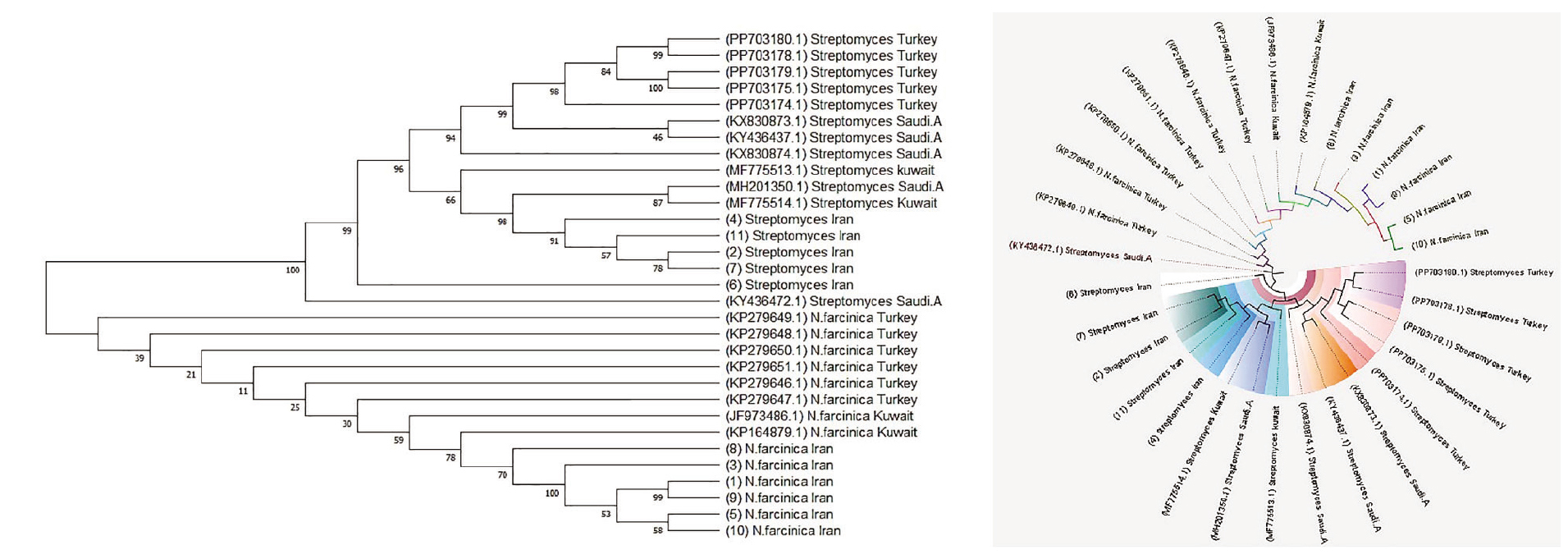
Figure 2. Phylogenetic trees of the bacterial isolates include (up) an unrooted dendrogram and (down) a circular phylogenetic tree (bootstrap of 1000)
Antibiotic Susceptibility Patterns
In general, N. farcinica and Streptomyces spp. isolates were susceptible to trimethoprim-sulfamethoxazole (cotrimoxazole) and relatively resistant to penicillin G, tetracycline, amoxicillin, and erythromycin (table 3).
| Strain (isolate no.) | SXT (mm) | Penicillin (mm) | Amoxicillin (mm) | Erythromycin (mm) | Tetracycline (mm) |
|---|---|---|---|---|---|
| N. farcinica (92/199) | 36 (S) | R (no zone) | 12 (R) | R (no zone) | 17 (R) |
| Streptomyces sp. (01/295) | 38 (S) | R (no zone) | 13 (R) | R (no zone) | 16 (R) |
| N. farcinica (98/191) | 39 (S) | R (no zone) | 14 (R) | R (no zone) | 16 (R) |
| Streptomyces sp. (92/1375) | 38 (S) | R (no zone) | 13 (R) | R (no zone) | 15 (R) |
| N. farcinica (92/1375) | 35 (S) | R (no zone) | 12 (R) | R (no zone) | 16 (R) |
| Streptomyces sp. (91/29) | 36 (S) | R (no zone) | 13 (R) | R (no zone) | 16 (R) |
| Streptomyces sp. (90/51) | 36 (S) | R (no zone) | 12 (R) | R (no zone) | 16 (R) |
| N. farcinica (92/199) | 36 (S) | R (no zone) | 12 (R) | R (no zone) | 16 (R) |
| Streptomyces sp. (87/154) | 36 (S) | R (no zone) | 13 (R) | R (no zone) | 16 (R) |
| Streptomyces sp. (00/162) | 36 (S) | R (no zone) | 12 (R) | R (no zone) | 16 (R) |
Discussion
In the current study, filamentous bacteria were overall identified in 5.3% of HIV-positive patients, including Nocardia (2.9%) and Streptomyces (2.4%) spp. The highest prevalence of the bacteria was reported in males (74.1%) and patients aged 41-60 y. Our phylogenetic study demonstrated significant genetic similarities between the isolates. Furthermore, the isolates were susceptible to trimethoprim-sulfamethoxazole (cotrimoxazole) but resistant to other antimicrobials, including penicillin G, tetracycline, amoxicillin, and erythromycin. This highlighted the potential roles of oral hygiene in decreasing infection risks. Generally, improved hygiene practices and early treatment interventions are critical in decreasing bacterial infections. Poor oral hygiene might contribute to systemic inflammation and create an appropriate environment for infections. Similarly, poor oral hygiene exacerbates bacterial colonization and biofilm formation, reinforcing the need for public health intervention focused on oral care education. 22 However, these findings were not significantly correlated with the prevalence of filamentous bacteria in HIV-positive individuals. Steinbrink and colleagues reported that the occurrence of nocardiosis increased from 0.3% in healthy individuals to 1.85% in those infected with HIV. Fathi and colleagues detected that Candida spp. were present in 47.2% of individuals with HIV and in 38.9% in those without the infection. 23 Smoking might alter the oral microbiome, decreasing beneficial microbial populations and allowing opportunistic pathogens to propagate. The findings were generally similar to those of global studies, demonstrating that Nocardia and Streptomyces spp. are opportunistic pathogens in immunocompromised individuals. 24 A comprehensive review highlighted that oral microbiota, including filamentous bacteria such as Actinomyces and Nocardia, were increasingly resistant to common antibiotics. The study emphasized that HIV-positive individuals showed accelerated resistance patterns due to immune suppression and frequent antimicrobial exposure. It also suggested that oral resistance contributed to systemic comorbidities in these patients. 25 Research has demonstrated that HIV infection alters oral microbial communities, promoting survival of resistant filamentous bacteria. Studies have detected that mucosal immune dysfunction in HIV patients facilitates colonization by opportunistic species, including Nocardia and Streptomyces. These changes increase susceptibility to oral inflammations and complicate treatment outcomes. 3
In our phylogenetic study, N. farcinica strains from Iran overall formed a separate, closely related group, while strains from Turkey were further dispersed but still related. Strains from Kuwait seemed genetically closer to Iranian strains. Comparatively, Streptomyces spp. from Iran showed greater divergence, possibly due to environmental or genetic factors, with closer similarities to those from Kuwait and Saudi Arabia. Streptomyces spp. from Turkey were closely clustered, while Streptomyces spp. from Kuwait and Saudi Arabia formed distinct but close clusters. 19
In AST of the present study, trimethoprim-sulfamethoxazole (cotrimoxazole) efficacy suggested this antimicrobial agent as a primary treatment option, while resistance to other antimicrobials highlighted the necessity for continuous surveillance and updated treatment guidelines. 23 Osamu and colleagues reported that Actinomyces israelii of clinical samples included resistance to ofloxacin and sodium fluoride, unlike other Actinomyces strains. Although Actinomyces spp. are generally susceptible to antibiotics such as penicillin, cephalosporins, clindamycin, carbapenems, and tetracycline, A. israelii showed an unusual resistance specifically to penicillin. 26 Salehipour and colleagues reported that all 31 Nocardia asteroides isolates were completely susceptible to trimethoprim-sulfamethoxazole and linezolid, while demonstrating moderate susceptibility to a range of antibiotics, including amoxicillin, clavulanic acid, cefepime, ceftriaxone, ciprofloxacin, imipenem, moxifloxacin, and tobramycin. 27
High resistance rates to commonly used antimicrobials such as penicillin G and tetracycline suggested the emergence of resistance mechanisms, possibly linked to genetic mutations or horizontal gene transfers. Technically, AST of filamentous bacteria is a difficult, time-consuming task as these bacteria are strong producers of most antibiotics. This is a time-consuming, labor-intensive procedure with possibly variable results. It is noteworthy that bibles such as CLSI handbooks only include reference values of a very few antimicrobials for actinomycetes. For example, the latest version of the CLSI handbook only provides AST values of actinomycetes to trimethoprim-sulfamethoxazole. Lack of sufficient data on AST results for these bacteria has limited the establishment of clear, reliable cutoffs, forcing microbial researchers to collect AST data based on their own studies. In general, these findings highlight the importance of molecular studies to identify resistance genes. Although this study has provided valuable insights into filamentous bacterial infections in HIV-positive patients, it included limitations as well. These limitations included a single-center design of the study as well as the calculated small sample size, which must be addressed in further studies. Relatively, routine oral screening of filamentous bacteria for HIV-positive patients is strongly recommended.
Conclusion
In conclusion, this study has shown widespread of filamentous bacteria in the oral cavity of HIV-positive patients. Additionally, the efficacy of trimethoprim-sulfamethoxazole suggests its potential as an effective treatment choice, while high resistance to penicillin G and erythromycin necessitates careful antibiotic selection for HIV-positive patients as antimicrobial susceptibility patterns of actinomycetes are quite complex because of the bacteria’s potential to produce most antimicrobials. However, further comprehensive studies on bacterial distribution and their resistance patterns are necessary to justify the current clinical results. The suggested studies can be supported by control groups.
Acknowledgment
The authors sincerely thank all personnel of the Microbiology Laboratory, Department of Pathobiology, School of Public Health, Tehran University of Medical Sciences, as well as those in the Department of Microbiology and Immunology, Faculty of Veterinary Medicine, University of Tehran. This study was supported by a grant from the Deputy of Research, School of Public Health, Tehran University of Medical Sciences (contract no. 1402-4-296-65582).
Authors’ Contribution
ON: Methodology, validation, investigation, data curation, writing; GJS: Formal analysis, data curation, writing original draft preparation; IAT: Methodology, validation, investigation, writing; AAB: Formal analysis, writing, review and editing, visualization; RMNF: Conceptualization, writing, review and editing, supervision, project administration. All authors have read and approved the final manuscript and agree to be accountable for all aspects of the work in ensuring that questions related to the accuracy or integrity of any part of the work are appropriately investigated and resolved.
AI Declaration
No AI assistance was used in the preparation of the current manuscript.
Conflict of Interest
None declared.
References
- Gandhi RT, Landovitz RJ, Sax PE, Smith DM, Springer SA, Gunthard HF, et al. Antiretroviral Drugs for Treatment and Prevention of HIV in Adults: 2024 Recommendations of the International Antiviral Society-USA Panel. JAMA. 2025; 333:609-28. DOI | PubMed
- Djawe K, Buchacz K, Hsu L, Chen MJ, Selik RM, Rose C, et al. Mortality Risk After AIDS-Defining Opportunistic Illness Among HIV-Infected Persons--San Francisco, 1981-2012. J Infect Dis. 2015; 212:1366-75. Publisher Full Text | DOI | PubMed [ PMC Free Article ]
- Coker MO, Cairo C, Garzino-Demo A. HIV-Associated Interactions Between Oral Microbiota and Mucosal Immune Cells: Knowledge Gaps and Future Directions. Front Immunol. 2021; 12:676669. Publisher Full Text | DOI | PubMed [ PMC Free Article ]
- Marsh PD. In Sickness and in Health-What Does the Oral Microbiome Mean to Us? An Ecological Perspective. Adv Dent Res. 2018; 29:60-5. DOI | PubMed
- Zhang Y, Wang X, Li H, Ni C, Du Z, Yan F. Human oral microbiota and its modulation for oral health. Biomed Pharmacother. 2018; 99:883-93. DOI | PubMed
- Samaranayake L, Matsubara VH. Normal Oral Flora and the Oral Ecosystem. Dent Clin North Am. 2017; 61:199-215. DOI | PubMed
- Belstrom D. The salivary microbiota in health and disease. J Oral Microbiol. 2020; 12:1723975. Publisher Full Text | DOI | PubMed [ PMC Free Article ]
- Heron SE, Elahi S. HIV Infection and Compromised Mucosal Immunity: Oral Manifestations and Systemic Inflammation. Front Immunol. 2017; 8:241. Publisher Full Text | DOI | PubMed [ PMC Free Article ]
- Zapun A, Vernet T, Pinho MG. The different shapes of cocci. FEMS Microbiol Rev. 2008; 32:345-60. DOI | PubMed
- Valour F, Senechal A, Dupieux C, Karsenty J, Lustig S, Breton P, et al. Actinomycosis: etiology, clinical features, diagnosis, treatment, and management. Infect Drug Resist. 2014; 7:183-97. Publisher Full Text | DOI | PubMed [ PMC Free Article ]
- Mabeza GF, Macfarlane J. Pulmonary actinomycosis. Eur Respir J. 2003; 21:545-51. DOI | PubMed
- Nikolaidis M, Hesketh A, Frangou N, Mossialos D, Van de Peer Y, Oliver SG, et al. A panoramic view of the genomic landscape of the genus Streptomyces. Microb Genom. 2023; 9Publisher Full Text | DOI | PubMed [ PMC Free Article ]
- Chater KF. Morphological and physiological differentiation in Streptomyces. Microbial development. 1984;89-116.
- Mehta HH, Shamoo Y. Pathogenic Nocardia: A diverse genus of emerging pathogens or just poorly recognized? PLoS Pathog. 2020; 16:e1008280. Publisher Full Text | DOI | PubMed [ PMC Free Article ]
- Das AK, Nandy S, Dudeja M, Tiwari R, Alam S. The incidence of nocardiosis at pulmonary and extra - pulmonary sites. J Clin Diagn Res. 2013; 7:1427-9. Publisher Full Text | DOI | PubMed [ PMC Free Article ]
- Silva CL, Tincani I, Brandao Filho SL, Faccioli LH. Mouse cachexia induced by trehalose dimycolate from Nocardia asteroides. J Gen Microbiol. 1988; 134:1629-33. DOI | PubMed
- Frieri M, Kumar K, Boutin A. Antibiotic resistance. J Infect Public Health. 2017; 10:369-78. DOI | PubMed
- Woods GL, Brown-Elliott BA, Conville PS, Desmond EP, Hall GS, Lin G, et al. Susceptibility Testing of Mycobacteria, Nocardiae, and Other Aerobic Actinomycetes. CLSI Standards: Guidelines for Health Care Excellence. New Jersey: Wayne; 2011. DOI | PubMed
- Khan Z, Al-Sayer H, Chugh TD, Chandy R, Provost F, Boiron P. Antimicrobial susceptibility profile of soil isolates of Nocardia asteroides from Kuwait. Clin Microbiol Infect. 2000; 6:94-8. DOI | PubMed
- Kotrbova L, Lara AC, Corretto E, Scharfen J, Ulmann V, Petrickova K, et al. Evaluation and comparison of antibiotic susceptibility profiles of Streptomyces spp. from clinical specimens revealed common and region-dependent resistance patterns. Sci Rep. 2022; 12:9353. Publisher Full Text | DOI | PubMed [ PMC Free Article ]
- Ambaye A, Kohner PC, Wollan PC, Roberts KL, Roberts GD, Cockerill FR. Comparison of agar dilution, broth microdilution, disk diffusion, E-test, and BACTEC radiometric methods for antimicrobial susceptibility testing of clinical isolates of the Nocardia asteroides complex. J Clin Microbiol. 1997; 35:847-52. Publisher Full Text | DOI | PubMed [ PMC Free Article ]
- World Health Organization. Global antimicrobial resistance and use surveillance system (GLASS) report 2022. Geneva: WHO; 2022.
- Steinbrink J, Leavens J, Kauffman CA, Miceli MH. Manifestations and outcomes of nocardia infections: Comparison of immunocompromised and nonimmunocompromised adult patients. Medicine (Baltimore).. 2018; 97:e12436. Publisher Full Text | DOI | PubMed [ PMC Free Article ]
- Abbasian L, Dehghan Manshadi S, Hassan Nezhad M, Masoumzadeh N, Ghaderkhani S, Keyvanfar A. A Case Report of Disseminated Nocardiosis in a Patient with HIV Infection: Concurrent Liver, Pulmonary, and Brain Involvements. Arch Clin Infect Dis. 2024; 19:e140527. DOI
- Kulis E, Cvitkovic I, Pavlovic N, Kumric M, Rusic D, Bozic J. A Comprehensive Review of Antibiotic Resistance in the Oral Microbiota: Mechanisms, Drivers, and Emerging Therapeutic Strategies. Antibiotics (Basel).. 2025; 14Publisher Full Text | DOI | PubMed [ PMC Free Article ]
- Tsuzukibashi O, Fukatsu A, Fuchigami M, Uchibori S, Komine C, Umezawa K, et al. Isolation and identification methods for Actinomyces israelii involved in actinomycosis. Open J Stomatol. 2022; 12:108-18. DOI
- Salehipour M, Zaker Bostanabad S, Rezaee S, Hashemi-Shahraki A. Antimicrobial susceptibility of clinical isolates of Nocardia in Iran. New Cell Mol Biotechnol J. 2016; 6:99-106.


