
What’s Known
A study observed a significantly increased risk of hyperuricemia in Japanese men with a history of smoking. However, a Korean study concluded that smoking status was associated with serum hyperuricemia only in women.
What’s New
In this study, serum cotinine concentration was found to be associated with hyperuricemia among American adolescents. This association remained robust even after adjusting for potential confounders and was consistent across sensitivity analyses using alternative definitions of both exposure and outcome.
Introduction
Hyperuricemia, primarily caused by disturbances in purine metabolism, is a component of the cluster of metabolic and hemodynamic abnormalities known as metabolic syndrome. 1 It is significantly associated with cardiovascular disease, 2 renal disease, 3 obesity, 4 non-alcoholic fatty liver disease (NAFLD), 5 and type 2 diabetes. 6
According to National Health and Nutrition Examination Survey (NHANES) data, the prevalence of hyperuricemia in the United States has increased steadily and now affects a younger population. This rising prevalence among adolescents has become a significant public health concern. For example, a survey of Chinese children and adolescents showed that the prevalence of hyperuricemia increased from 16.7% during 2009-2015 to 24.8% during 2016-2019. 7 - 9
Elevated serum uric acid (SUA) typically arises through two main pathways. The first is via increased production, where exogenous, genetic, or environmental factors interfere with normal purine metabolism, leading to SUA accumulation. The second is via decreased excretion, often due to diminished renal function, which impairs the body’s ability to eliminate SUA. 10
Although previous studies demonstrated the effects of high-purine diets, 11 alcohol consumption, 12 and sugar-sweetened beverages on SUA, 13 the effects of tobacco exposure on SUA remain unclear, with conflicting results in the literature. A study observed a significantly increased risk of hyperuricemia in Japanese men who were former smokers. 14 However, a Korean study concluded that smoking status was associated with serum hyperuricemia only in women, 15 while an analysis of data from the Frachial Heart Study cohort reported a reduced risk of hyperuricemia among smokers (regardless of sex). 16 To date, no studies have investigated the relationship between tobacco exposure and hyperuricemia in adolescent populations.
Given the known underestimation of smoking in self-reported data, serum cotinine concentrations could provide a more accurate biomarker of tobacco exposure. Therefore, the present study investigated the association between serum cotinine levels (a biomarker of tobacco exposure) and hyperuricemia in adolescents aged 12-19 years using data from the NHANES from 2007 to 2018.
Materials and Methods
Study Population
The NHANES is a nationally representative, cross-sectional survey conducted biennially among the non-institutionalized civilian population of the United States. Participants undergo in-depth interviews, physical examinations, and laboratory tests. 17 As the largest source of objective health information in the U.S., NHANES data are crucial for understanding the health and nutritional status of American youth.
For this study, participants enrolled in NHANES from 2007 to 2018 were screened. The Initial pool consisted of 61,125 participants, which included 7,937 adolescents aged 12-19 years. Participants with missing data for blood cotinine (n=1064) and SUA (n=42) were excluded. Ultimately, 6,831 eligible participants were included in the analysis (figure 1).
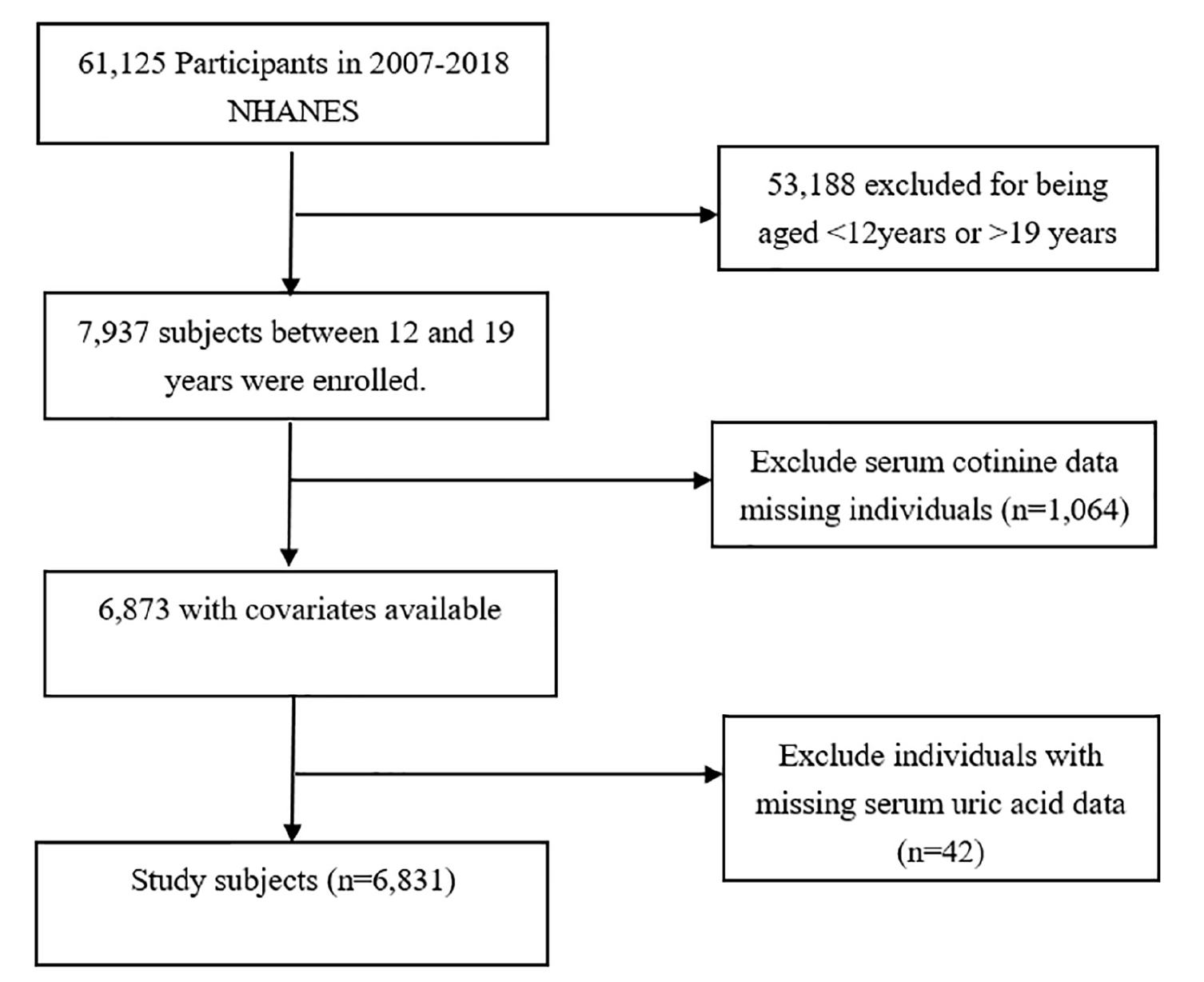
Figure 1. The figure shows the participant selection flowchart for the analysis of serum cotinine and hyperuricemia in US adolescents (NHANES, 2007-2018).
The NHANES protocol has received approval from the National Center for Health Statistics (NCHS) Research Ethics Review Board since 1999. For this specific study, the Institutional Review Board at the Albert Einstein College of Medicine formally categorized the secondary analyses of de-identified data as exempt from review. 17 The use of existing, de-identified public data does not require additional written informed consent from participants.
Primary Exposure
Cotinine, a primary metabolite of nicotine, is a key biomarker of tobacco smoke exposure due to its extended half-life (15-20 hours) and stability. Serum cotinine levels were determined using isotope dilution high-performance liquid chromatography coupled with atmospheric pressure chemical ionization tandem mass spectrometry. The lower limit of detection (LLOD) for this method is 0.015 μg/L. The reportable range varies by sample volume: an upper reportable limit of 25 μg/L (for a 0.2 mL sample) and 400 μg/L (for a 0.05 mL sample). All analyses demonstrated high accuracy and precision and were performed at the Division of Laboratory Sciences, National Center for Environmental Health, Centers for Disease Control and Prevention (Atlanta, Georgia). 18
Serum Uric Acid Measurement
Hyperuricemia was determined from SUA levels obtained from laboratory data. Venous blood samples were collected from participants. Serum was separated and stored at -20°C until analysis. Trained technicians at Collaborative Laboratory Services (Ottumwa, Iowa, USA) measured SUA levels using a timed-endpoint method based on a Beckman Coulter UniCel® DxC 800 analyzer. Based on previous pediatric studies, hyperuricemia was defined as SUA≥5.5 mg/dL. 19 - 21
Other Covariates
Participants’ characteristics included age, sex (male or female), race/ethnicity (Mexican American, Other Hispanic, Non-Hispanic White, Non-Hispanic Black, Other), and educational attainment (less than high school, high school or equivalent, or more than high school). Body mass index (BMI) was calculated according to the Centers for Disease Control and Prevention (CDC) guidelines as weight in Kg divided by the square of height in meters (Kg/m2). Participants were categorized as having normal weight, overweight (>85th percentile), or obesity (>95th percentile) based on age- and sex-specific BMI z-scores. 22
Blood pressure was measured at mobile screening centers. Socioeconomic status was assessed using the Household Poverty Index (HPI), which divided the monthly household income by the Department of Health (DOH) and Human Services Poverty Reduction Points (HSPRPs), specific to family size, year, and status. Categories were defined as ≤130%, >130% to ≤185%, and >185% of the poverty threshold.
Health insurance status was dichotomized as yes or no. “Yes” included private insurance, direct purchase plans, and government programs (e.g., Medicare, Medicaid). Trained interviewers assessed this variable using a computer-assisted personal interview (CAPI) system. For participants reporting coverage, interviewers requested to provide their insurance card. Proxy respondents provided information for participants under 16 years of age or those unable to answer for themselves.
The blood urea nitrogen (BUN) and serum creatinine levels were measured using a Roche Cobas 6000 analyzer (c501 module) at the University of Minnesota Advanced Research and Diagnostics Laboratory (ARDL).
Statistical Analysis
In the present study, continuous variables with a normal distribution were presented as the mean±SD, and continuous variables with a skewed distribution were presented as median (interquartile range, IQR). Group differences for continuous variables were analyzed using Student’s t test or one-way ANOVA, with post hoc multiple comparisons performed using the SNK or LSD methods. Categorical variables were presented as frequencies (percentages) and were compared using the Chi square test or Fisher’s Exact Test, as appropriate. All reported P values were two-sided, and a value of <0.05 was considered statistically significant.
All statistical analyses were performed using R software (version 4.3.1, The R Foundation, Vienna, Austria) and Free Statistics software version 7.1 (https://app.clinicalscientists.cn,China).
The association between serum cotinine and hyperuricemia was assessed using multiple logistic regression. In the primary analysis, serum cotinine was modeled as a continuous variable. Additionally, sensitivity analysis was performed to assess the robustness of the primary findings. First, serum cotinine was modeled as a categorical variable. Participants were categorized based on established cut-points: 23 Non-smoking: <0.015 μg/L (below the limit of detection) or <0.05 μg/L, passive smoking: 0.05-10 μg/L, active smoking: >10 μg/L. A P value for trend across these categories was calculated to compare the results with the continuous model.
Second, we conducted stratified analyses to evaluate potential effect modification. The dose-response relationship between serum cotinine and hyperuricemia was assessed within strata defined by age (<15 vs. ≥15 years), sex, BMI (normal weight, overweight, obesity), and poverty-to-income ratio (≤1.3, >1.3-1.85, >1.85), based on established categories. 22
Results
Participant Characteristics
The demographic characteristics of the study participants stratified by serum cotinine levels are presented in table 1. Among the 6,831 study participants, the median age was 15.5 years, and the median SUA was 5.0 mmol/L. Overall, 52.3% of the participants were men, 34.4% had hyperuricemia, and 46.7% had a serum cotinine level higher than 0.05 ng/mL.
| Variable | Total (n=6,831) | Cotinine<0.05 μg/L (n=3,643) | Cotinine≥0.05 μg/L (n=3,188) | P value | |
|---|---|---|---|---|---|
| Age (mean±SD) | 15.5±2.3 | 15.1±2.2 | 15.9±2.3 | <0.001* | |
| Sex, n (%) | Male | 3575 (52.3) | 1761 (48.3) | 1814 (56.9) | <0.001** |
| Female | 3256 (47.7) | 1882 (51.7) | 1374 (43.1) | ||
| Race, n (%) | Mexican American | 1672 (24.5) | 1166 (32) | 506 (15.9) | <0.001** |
| Other Hispanic | 813 (11.9) | 499 (13.7) | 314 (9.8) | ||
| Non-Hispanic White | 1957 (28.6) | 912 (25) | 1045 (32.8) | ||
| Non-Hispanic Black | 1615 (23.6) | 572 (15.7) | 1043 (32.7) | ||
| Other Race | 774 (11.3) | 494 (13.6) | 280 (8.8) | ||
| BMI (Kg/m2), n (%) | Normal | 3992 (59.2) | 2210 (61.3) | 1782 (56.8) | <0.001** |
| Overweight | 1233 (18.3) | 653 (18.1) | 580 (18.5) | ||
| Obese | 1517 (22.5) | 743 (20.6) | 774 (24.7) | ||
| Education, n (%) | <High school | 2917 (42.7) | 1765 (48.4) | 1152 (36.2) | <0.001** |
| High school | 2875 (42.1) | 1435 (39.4) | 1440 (45.2) | ||
| >High school | 1036 (15.2) | 443 (12.2) | 593 (18.6) | ||
| SBP (mean±SD) | 109.2±10.3 | 108.3±10.0 | 110.3±10.5 | <0.001* | |
| DBP (mean±SD) | 58.7±12.7 | 58.4±12.4 | 59.1±13.0 | 0.027* | |
| Poverty-income ratio (%) | ≤1.30 | 2733 (43.7) | 1125 (34.1) | 1608 (54.5) | <0.001** |
| 1.30-1.85 | 864 (13.8) | 447 (13.5) | 417 (14.1) | ||
| >1.85 | 2656 (42.5) | 1730 (52.4) | 926 (31.4) | ||
| Insurance, n (%) | Yes | 5719 (84.2) | 3123 (86.1) | 2596 (82) | <0.001* |
| No | 1077 (15.8) | 506 (13.9) | 571 (18) | ||
| BUN (mean±SD) | 10.5±3.3 | 10.7±3.3 | 10.4±3.3 | <0.001* | |
| Creatinine (mean±SD) | 0.7±0.2 | 0.7±0.2 | 0.8±0.2 | <0.001* | |
| UA (mean±SD) | 5.0±1.2 | 4.9±1.2 | 5.2±1.3 | <0.001* | |
| Hypertension, n (%) | No | 4481 (65.6) | 2542 (69.8) | 1939 (60.8) | <0.001** |
| Yes | 2350 (34.4) | 1101 (30.2) | 1249 (39.2) | ||
| eGFR (mean±SD) | 146.7 (31.1) | 150.1 (33.5) | 143.3 (28.1) | <0.001* | |
| Contine10, median (IQR) | 0.4 (0.1, 4.7) | 0.2 (0.1, 0.2) | 5.9 (1.3, 52.1) | <0.001* | |
| BMI: Body mass index; SBP: Systolic blood pressure; DBP: Diastole blood pressure; BUN: Blood urea nitrogen; Cr: Creatinine; SUA: Serum uric acid; eGFR: Estimated glomerular filtration rate; *t test and, **Chi square test | |||||
Participants with higher serum cotinine levels were more likely to be men, to identify as non-Hispanic white and non-Hispanic black, and to have a lower BMI. They also tended to have a moderate level of education, a lower household income, higher systolic and diastolic blood pressure (SBP and DBP), lower BNU, and higher SUA levels.
Associations Between Serum Cotinine and Hyperuricemia
The results of the binary logistic regression analysis are presented in table 2. Serum cotinine level was positively associated with the risk of hyperuricemia. In the crude model, each 10-fold increase in serum cotinine (log<sub>10</sub>-transformed) was associated with a 23% higher odds of hyperuricemia (odds ratio [OR]: 1.23; 95% confidence interval [CI]: 1.18-1.28). This association remained statistically significant after sequential adjustment for covariates. The association was attenuated but persisted in the partially adjusted model (OR: 1.09; 95% CI: 1.04-1.14). In the fully adjusted model, the odds ratio was 1.07 (95% CI: 1.01-1.13). The P value for trend remained significant across models.
| Exposure | Crude model | Hyperuricemia | ||
|---|---|---|---|---|
| Model 1 | Model 2 | Model 3 | ||
| Cotinine (μg/L)a | ||||
| OR (95% CI) | 1.23 (1.18-1.28) | 1.09 (1.04-1.14) | 1.08 (1.02-1.13) | 1.07 (1.01-1.13) |
| P value | <0.001 | 0.001 | 0.007 | 0.017 |
| Sensitivity analyses | ||||
| Lower cutoff of cotinine (<0.015 μg/L) | ||||
| OR (95% CI) | 1.45 (1.29-1.63) | 1.29 (1.13-1.47) | 1.28 (1.11-1.47) | 1.28 (1.1-1.48) |
| P value | <0.001 | <0.001 | 0.001 | 0.001 |
| Higher cutoff of cotinine (≥0.05 μg/L) | ||||
| OR (95% CI) | 1.49 (1.35-1.64) | 1.3 (1.15-1.46) | 1.27 (1.12-1.45) | 1.26(1.1-1.44) |
| P value | <0.001 | <0.001 | <0.001 | 0.001 |
| Cotinine <0.05 μg/L | ||||
| OR (95% CI) | 1(Ref) | 1(Ref) | 1(Ref) | 1(Ref) |
| P value | ||||
| 10μg/L>Cotinine≥0.05 μg/L | ||||
| OR (95% CI) | 1.34 (1.21-1.5) | 1.32 (1.17-1.5) | 1.31 (1.14-1.50) | 1.29 (1.12-1.48) |
| P value | <0.001 | <0.001 | <0.001 | <0.001 |
| Cotinine≥10 μg/L | ||||
| OR (95% CI) | 2.1 (1.78-2.47) | 1.21 (0.99-1.46) | 1.14 (0.93-1.40) | 1.14 (0.92-1.42) |
| P value | <0.001 | 0.058 | 0.219 | 0.232 |
| P value for trend | <0.001 | 0.001 | 0.008 | 0.013 |
| aThe Log10-transformation values were used in the analysis; Model1 adjust age, sex, race; Model 2 adjust model 1+education, Poverty-income ratio, Insurance; Model 3 adjust all; BMI: Body mass index; SBP: Systolic blood pressure; DBP: Diastole blood pressure; BUN: Blood urea nitrogen; Cr: Creatinine; SUA: Serum uric acid; OR: odd ratio | ||||
Subgroup Analysis
Results of the subgroup analyses are summarized in figure 2. When stratified by age (dichotomized at 15 years), the association between serum cotinine levels and hyperuricemia was stronger in adolescents aged 12-15 years (OR: 1.24, 95% CI: 1.19-1.3) than in those aged 15-19 years(OR: 1.12, 95% CI: 1.02-1.23).
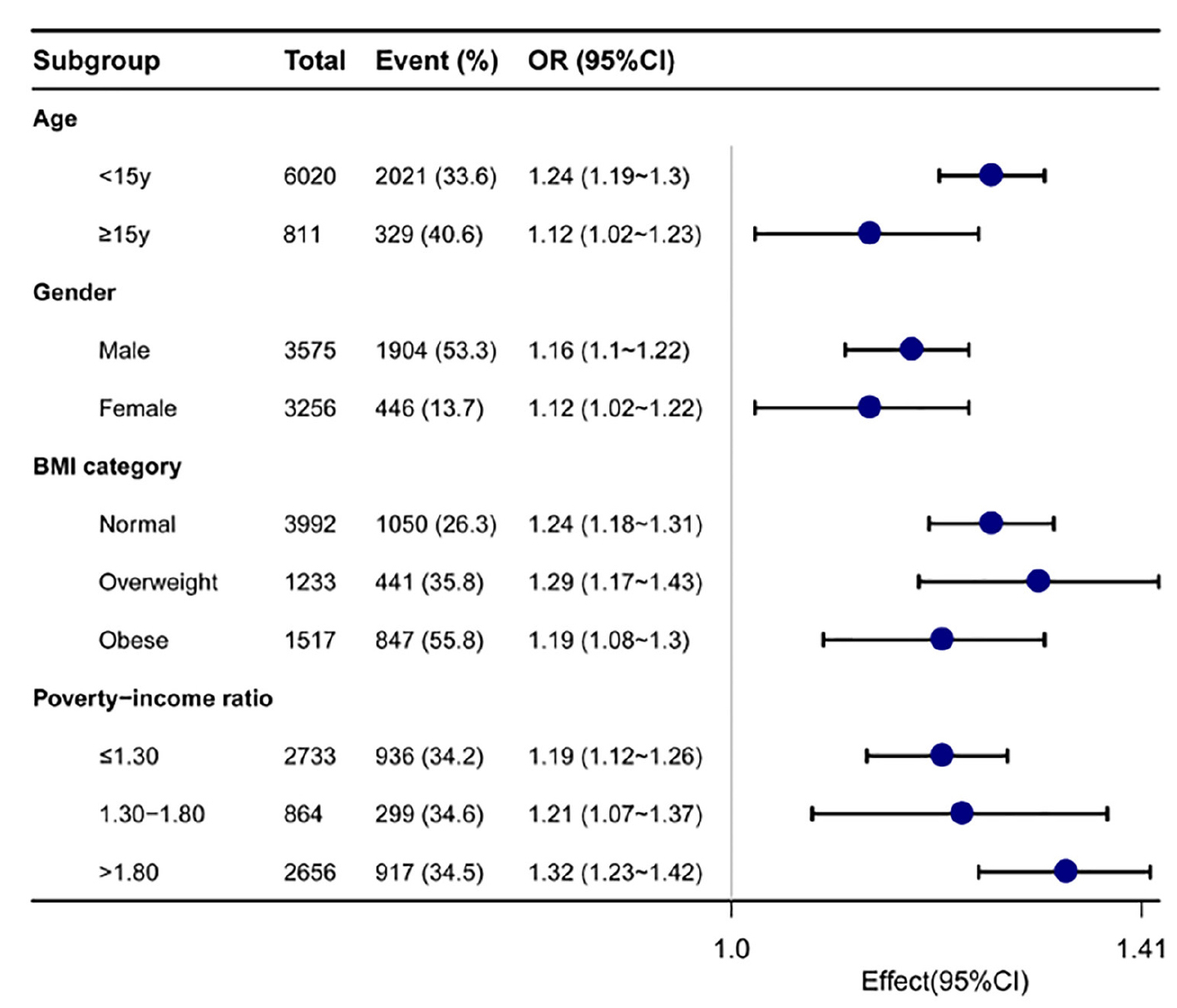
Figure 2. Forest plot shows the relationship between serum cotinine and hyperuricemia across subgroups.
Stratification by sex showed a significant association in both males (OR: 1.16, 95% CI: 1.1-1.22) and females (OR: 1.12, 95% CI: 1.02-1.22).
When stratified by BMI, a significant association was observed in the normal weight group (OR: 1.24, 95% CI: 1.18-1.31), the overweight group (OR: 1.29, 95% CI: 1.17-1.43), and the group with obesity (OR:1.19, 95% CI:1.08-1.30).
Finally, stratification by the poverty-to-income ratio (using thresholds of 1.3 and 1.85) revealed significant associations across all income groups, with odds ratios of 1.19 (95% CI: 1.12-1.26), 1.21 (95% CI: 1.07-1.37), and 1.32 (95% CI: 1.23-1.42), respectively.
Sensitivity Analysis
The results of the sensitivity analyses are presented in table 2. Using a lower serum cotinine threshold for detection (0.015 μg/L) yielded results similar to the primary analysis (OR: 1.45; 95% CI: 1.29-1.63).
Similarly, when participants were dichotomized by tobacco exposure (≥0.05 μg/L vs. <0.05 μg/L), serum cotinine remained significantly associated with hyperuricemia. This association persisted across sequential adjustments: OR: 1.49 (95% CI: 1.35-1.64) in the crude model; OR: 1.30 (95% CI: 1.15-1.46) after adjusting for age, sex, and race/ethnicity; OR: 1.27 (95% CI: 1.12-1.45) with further adjustment for education, insurance, and household income, OR: 1.27 (1.12-1.45), and OR: 1.26 (95% CI: 1.10-1.44) in the fully adjusted model.
When serum cotinine was categorized into three groups based on established smoking status cut-points (non-smoking: <0.05 μg/L; passive smoking: 0.05-10 μg/L; active smoking: >10 μg/L), the risk of hyperuricemia was significantly elevated for both exposed groups compared to non-smokers. The odds were 34% higher in the passive smoking group (OR: 1.34; 95% CI: 1.21-1.50) and 110% higher in the active smoking group (OR: 2.10; 95% CI: 1.78-2.47). After full adjustment for confounders, these effect sizes were attenuated—a finding consistent with the primary analysis. However, the direction and significance of the associations persisted.
Discussion
In this cross-sectional study of 6,831 American adolescents, we identified a statistically significant association between serum cotinine levels and hyperuricemia. This association persisted even after adjusting for demographic characteristics, income, insurance status, systolic blood pressure, diastolic blood pressure, BNU, and eGFR with an adjusted odds ratio of 1.07 (95% CI: 1.01-1.13).
The finding was robust across multiple analytical approaches. This association remained significant regardless of whether serum cotinine was mediated as a continuous or categorical variable. Furthermore, the association was consistent across subgroups stratified by age, sex, BMI, and poverty-to-income ratio. Additionally, sensitivity analyses using alternative definitions for tobacco exposure also demonstrated the stability of this relationship.
Previous studies showed an association between serum cotinine concentration and blood uric acid. 24 , 25 As a biomarker of active and passive tobacco smoke exposure, serum cotinine concentration was linked to impaired renal function. For instance, a study in 2022 confirmed a positive association between the rate of urinary albumin excretion—an indicator of glomerular pathology—and the number of cigarettes smoked per day (quantified via cotinine excretion) in a population with initially normal renal function. 24 , 25 Other studies reported higher urinary microalbumin levels in active smokers than in passive smokers and non-smoking controls. 24 , 25 Urinary albumin is a reliable indicator of glomerular pathology, and the fact that smoking is associated with albumin suggests that smoking directly or indirectly induces kidney damage. 26
While most evidence indicated that tobacco use increased the risk of hyperuricemia, 14 some studies proposed a protective association, possibly due to substances in tobacco that influence the uric acid metabolic pathway. 16
Nonetheless, the literature analyzing the relationship between serum cotinine and hyperuricemia in adolescents remains still limited, and the present study suggested that blood cotinine concentration was an independent risk factor for hyperuricemia in this population. This finding was supported by available data indicating a physiologically plausible association between tobacco exposure (active smoking/passive smoking) and hyperuricemia.
The primary mechanism for hyperuricemia is reduced renal excretion. 27 The kidneys excreted 75% of daily uric acid production. Therefore, renal health is essential for maintaining uric acid homeostasis. 28 One key renal factor contributing to hyperuricemia is a reduced GFR. 29 In a large cohort study in 2016, smoking was found to be negatively associated with GFR. 30 Proposed mechanisms include chronic endothelial damage from smoking, which decreases renal plasma flow and increases endothelin-1 concentrations, promoting vascular dysfunction. 31 Histopathological studies in animals exposed to cigarette smoke showed degenerative changes in the proximal renal tubules, hyperplasia, and glomerulosclerosis, alongside significantly elevated SUA levels compared to unexposed rats. 32 Furthermore, exposure to toxic metals in cigarette smoke, such as cadmium and lead, might directly impair kidney function and elevate uric acid concentrations. 33 Finally, physiologic responses to the oxidative stress of smoking might also explain the negative effects of smoking on SUA levels. Oxidative stress caused by reactive oxygen species from smoking constituents could stimulate uric acid production, which might increase as a compensatory antioxidant response. 34
In our subgroup analysis, the association between serum cotinine and hyperuricemia was slightly stronger in males (OR: 1.16) than in females (OR: 1.12). This difference might be attributable to the historically higher prevalence of smoking among males than females. 35 - 37
The higher the household income, the higher the risk of hyperuricemia, and the analysis of tobacco use among US adults in 2021 was for low-income (24.7%), middle-income (18.9%), and upper-income (14.8%) individuals. 38 The results were consistent in reports of adult tobacco use from 2007 to 2018, all of which showed low rates of tobacco use among those with higher incomes. 36 However, the results of the present study showed that the higher the household income, the higher the risk of hyperuricemia, probably because adult tobacco use was not representative of the youth population aged 12 to 19 years. Furthermore, the pathogenesis of hyperuricemia in higher-income adolescents might involve factors beyond tobacco exposure. Diets more common in higher-income families—often richer in alcohol, seafood, meat, and fructose—could significantly increase uric acid production, 39 , 40 potentially amplifying the risk associated with tobacco exposure in this subgroup.
While the present study had notable strengths, including a large, nationally representative sample, a well-phenotyped population, and the use of objective biomarkers of tobacco exposure, it also had several limitations. As a secondary analysis of existing data, we could not collect new variables, leaving a potential for residual risk of confounding by unmeasured factors.
While dietary data were available in NHANES, it was not included in this analysis due to concerns regarding recall bias. Consequently, we were unable to adjust for dietary patterns, which are a known potential confounder.
Furthermore, our data provided limited information on certain aspects of tobacco exposure among adolescents. This included the history of recent smoking cessation, the duration and timing of passive smoke exposure, and the specific modalities of tobacco intake (e.g., traditional cigarettes vs. electronic nicotine delivery systems). Despite these limitations, the use of serum cotinine as a biomarker represents a significant methodological strength, providing a more accurate assessment of tobacco exposure than self-reported measures alone.
Conclusion
In this cross-sectional study, serum cotinine concentrations were associated with hyperuricemia among American adolescents. This association remained robust after adjustment for multiple potential confounders and was consistent across sensitivity analyses using alternative definitions of exposure and outcome. These findings suggested that tobacco exposure, a modifiable risk factor, might adversely affect multiple physiological systems, including the renal and metabolic pathways implicated in uric acid homeostasis. The findings underscored the potential public health benefits of preventing tobacco exposure and promoting smoking cessation to protect adolescent health.
Authors’ Contribution
W.H: Research conceptualization, study design, and drafting of the manuscript; Zh.W: Acquisition and interpretation of the data and drafting the manuscript; F.G: Research conceptualization, study design, and drafting the manuscript; All authors approved the submission of the manuscript and agree to be accountable for all aspects of the work in ensuring that questions related to the accuracy or integrity of any part of the work are appropriately investigated and resolved.
AI Declaration
The authors declare that no AI tools were used in the preparation of this manuscript.
Conflict of Interest
None declared.
References
- Lima WG, Martins-Santos ME, Chaves VE. Uric acid as a modulator of glucose and lipid metabolism. Biochimie. 2015; 116:17-23. DOI | PubMed
- Zhao G, Huang L, Song M, Song Y. Baseline serum uric acid level as a predictor of cardiovascular disease related mortality and all-cause mortality: a meta-analysis of prospective studies. Atherosclerosis. 2013; 231:61-8. DOI | PubMed
- Srivastava A, Kaze AD, McMullan CJ, Isakova T, Waikar SS. Uric Acid and the Risks of Kidney Failure and Death in Individuals With CKD. Am J Kidney Dis. 2018; 71:362-70. Publisher Full Text | DOI | PubMed [ PMC Free Article ]
- Oyama C, Takahashi T, Oyamada M, Oyamada T, Ohno T, Miyashita M, et al. Serum uric acid as an obesity-related indicator in early adolescence. Tohoku J Exp Med. 2006; 209:257-62. DOI | PubMed
- Wan X, Xu C, Lin Y, Lu C, Li D, Sang J, et al. Uric acid regulates hepatic steatosis and insulin resistance through the NLRP3 inflammasome-dependent mechanism. J Hepatol. 2016; 64:925-32. DOI | PubMed
- Kodama S, Saito K, Yachi Y, Asumi M, Sugawara A, Totsuka K, et al. Association between serum uric acid and development of type 2 diabetes. Diabetes Care. 2009; 32:1737-42. Publisher Full Text | DOI | PubMed [ PMC Free Article ]
- Zhu Y, Pandya BJ, Choi HK. Prevalence of gout and hyperuricemia in the US general population: the National Health and Nutrition Examination Survey 2007-2008. Arthritis Rheum. 2011; 63:3136-41. DOI | PubMed
- Chen-Xu M, Yokose C, Rai SK, Pillinger MH, Choi HK. Contemporary Prevalence of Gout and Hyperuricemia in the United States and Decadal Trends: The National Health and Nutrition Examination Survey, 2007-2016. Arthritis Rheumatol. 2019; 71:991-9. Publisher Full Text | DOI | PubMed [ PMC Free Article ]
- Rao J, Ye P, Lu J, Chen B, Li N, Zhang H, et al. Prevalence and related factors of hyperuricaemia in Chinese children and adolescents: a pooled analysis of 11 population-based studies. Ann Med. 2022; 54:1608-15. Publisher Full Text | DOI | PubMed [ PMC Free Article ]
- Wu ZD, Yang XK, He YS, Ni J, Wang J, Yin KJ, et al. Environmental factors and risk of gout. Environ Res. 2022; 212:113377. DOI | PubMed
- Villegas R, Xiang YB, Elasy T, Xu WH, Cai H, Cai Q, et al. Purine-rich foods, protein intake, and the prevalence of hyperuricemia: the Shanghai Men’s Health Study. Nutr Metab Cardiovasc Dis. 2012; 22:409-16. Publisher Full Text | DOI | PubMed [ PMC Free Article ]
- The Alcohol-Uric Acid Question. JAMA. 2016; 316:1501. DOI | PubMed
- Meneses-Leon J, Denova-Gutierrez E, Castanon-Robles S, Granados-Garcia V, Talavera JO, Rivera-Paredez B, et al. Sweetened beverage consumption and the risk of hyperuricemia in Mexican adults: a cross-sectional study. BMC Public Health. 2014; 14:445. Publisher Full Text | DOI | PubMed [ PMC Free Article ]
- Kono S, Shinchi K, Imanishi K, Honjo S, Todoroki I. Behavioural and biological correlates of serum uric acid: a study of self-defence officials in Japan. Int J Epidemiol. 1994; 23:517-22. DOI | PubMed
- Kim Y, Kang J. Association of urinary cotinine-verified smoking status with hyperuricemia: Analysis of population-based nationally representative data. Tob Induc Dis. 2020; 18:84. Publisher Full Text | DOI | PubMed [ PMC Free Article ]
- Wang W, Krishnan E. Cigarette smoking is associated with a reduction in the risk of incident gout: results from the Framingham Heart Study original cohort. Rheumatology (Oxford). 2015; 54:91-5. DOI | PubMed
- Chen TC, Clark J, Riddles MK, Mohadjer LK, Fakhouri THI. National Health and Nutrition Examination Survey, 2015-2018: Sample Design and Estimation Procedures. Vital Health Stat 2. 2020;1-35. PubMed
- World Health Organization. Tobacco. Geneva: WHO; 2023.
- Gu F, Luo X, Jin X, Cai C, Zhao W. Association of Total Calcium With Serum Uric Acid Levels Among United States Adolescents Aged 12-19 Years: A Cross-Sectional Study. Front Med (Lausanne). 2022; 9:915371. Publisher Full Text | DOI | PubMed [ PMC Free Article ]
- Hu G, Jia G, Tang S, Zheng P, Hu L. Association of low-level blood lead with serum uric acid in U.S. adolescents: a cross-sectional study. Environ Health. 2019; 18:86. Publisher Full Text | DOI | PubMed [ PMC Free Article ]
- Loeffler LF, Navas-Acien A, Brady TM, Miller ER, Fadrowski JJ. Uric acid level and elevated blood pressure in US adolescents: National Health and Nutrition Examination Survey, 1999-2006. Hypertension. 2012; 59:811-7. Publisher Full Text | DOI | PubMed [ PMC Free Article ]
- Brody DJ, Lu Z, Tsai J. Secondhand Smoke Exposure Among Nonsmoking Youth: United States, 2013-2016. NCHS Data Brief. 2019;1-8. PubMed
- Levy RV, Brathwaite KE, Sarathy H, Reidy K, Kaskel FJ, Melamed ML. Analysis of Active and Passive Tobacco Exposures and Blood Pressure in US Children and Adolescents. JAMA Netw Open. 2021; 4:e2037936. Publisher Full Text | DOI | PubMed [ PMC Free Article ]
- Tascon J, Prieto M, Casanova AG, Sanz FJ, Hernandez Mezquita MA, Barrueco Ferrero M, et al. Early Diagnosis of Kidney Damage Associated with Tobacco Use: Preventive Application. J Pers Med. 2022; 12Publisher Full Text | DOI | PubMed [ PMC Free Article ]
- Dulger H, Donder A, Sekeroglu MR, Erkoc R, Ozbay B. Investigation of the relationship between serum levels of cotinine and the renal function in active and passive smokers. Ren Fail. 2011; 33:475-9. DOI | PubMed
- Wang J, Chen Y, Zhong H, Chen F, Regenstein J, Hu X, et al. The gut microbiota as a target to control hyperuricemia pathogenesis: Potential mechanisms and therapeutic strategies. Crit Rev Food Sci Nutr. 2022; 62:3979-89. DOI | PubMed
- Api AM. Toxicological profile of diethyl phthalate: a vehicle for fragrance and cosmetic ingredients. Food Chem Toxicol. 2001; 39:97-108. DOI | PubMed
- Lipkowitz MS. Regulation of uric acid excretion by the kidney. Curr Rheumatol Rep. 2012; 14:179-88. DOI | PubMed
- Terkeltaub R. Update on gout: new therapeutic strategies and options. Nat Rev Rheumatol. 2010; 6:30-8. DOI | PubMed
- Xia J, Wang L, Ma Z, Zhong L, Wang Y, Gao Y, et al. Cigarette smoking and chronic kidney disease in the general population: a systematic review and meta-analysis of prospective cohort studies. Nephrol Dial Transplant. 2017; 32:475-87. DOI | PubMed
- Gambaro G, Verlato F, Budakovic A, Casara D, Saladini G, Del Prete D, et al. Renal impairment in chronic cigarette smokers. J Am Soc Nephrol. 1998; 9:562-7. DOI | PubMed
- Lhotta K, Rumpelt HJ, Konig P, Mayer G, Kronenberg F. Cigarette smoking and vascular pathology in renal biopsies. Kidney Int. 2002; 61:648-54. DOI | PubMed
- Lee J, Cooke JP. Nicotine and pathological angiogenesis. Life Sci. 2012; 91:1058-64. Publisher Full Text | DOI | PubMed [ PMC Free Article ]
- Jaimes EA, Tian RX, Joshi MS, Raij L. Nicotine augments glomerular injury in a rat model of acute nephritis. Am J Nephrol. 2009; 29:319-26. Publisher Full Text | DOI | PubMed [ PMC Free Article ]
- Hu SS, Neff L, Agaku IT, Cox S, Day HR, Holder-Hayes E, et al. Tobacco Product Use Among Adults - United States, 2013-2014. MMWR Morb Mortal Wkly Rep. 2016; 65:685-91. DOI | PubMed
- Phillips E, Wang TW, Husten CG, Corey CG, Apelberg BJ, Jamal A, et al. Tobacco Product Use Among Adults - United States, 2015. MMWR Morb Mortal Wkly Rep. 2017; 66:1209-15. Publisher Full Text | DOI | PubMed [ PMC Free Article ]
- Wang TW, Asman K, Gentzke AS, Cullen KA, Holder-Hayes E, Reyes-Guzman C, et al. Tobacco Product Use Among Adults - United States, 2017. MMWR Morb Mortal Wkly Rep. 2018; 67:1225-32. Publisher Full Text | DOI | PubMed [ PMC Free Article ]
- Cornelius ME, Loretan CG, Jamal A, Davis Lynn BC, Mayer M, Alcantara IC, et al. Tobacco Product Use Among Adults - United States, 2021. MMWR Morb Mortal Wkly Rep. 2023; 72:475-83. Publisher Full Text | DOI | PubMed [ PMC Free Article ]
- Nakagawa T, Lanaspa MA, Johnson RJ. The effects of fruit consumption in patients with hyperuricaemia or gout. Rheumatology (Oxford). 2019; 58:1133-41. DOI | PubMed
- Li R, Yu K, Li C. Dietary factors and risk of gout and hyperuricemia: a meta-analysis and systematic review. Asia Pac J Clin Nutr. 2018; 27:1344-56. DOI | PubMed


