Dear Editor
As a medical statistics specialist, understanding the distinctions between the terms “multilevel”, “multistate”, and “multiple” in research is crucial.
The term “multilevel” refers to statistical frameworks designed to analyze data organized hierarchically.1 Because of this design, these models allow researchers to examine the influence of various factors at different levels.2, 3 For instance, in a study focusing on student performance across various schools, a multilevel model can incorporate individual student characteristics, such as age, sex, and socioeconomic status, while also considering school-level factors such as funding, teacher quality, and school environment. This approach helps researchers gain a comprehensive understanding of how individual and institutional variables interact to affect educational outcomes. Understanding these distinctions is essential for accurately interpreting research findings and ensuring the appropriate statistical methods are applied.
Figure 1 shows an example of a multilevel model. This figure illustrates a two-level hierarchical structure in a multilevel model. Individual-level variables (student characteristics such as age, sex, and socioeconomic status) are nested within school-level variables (institutional factors including funding, teacher quality, and school environment). The diagram demonstrates how predictors from both levels can be simultaneously incorporated to examine their combined influence on outcomes (figure 1).
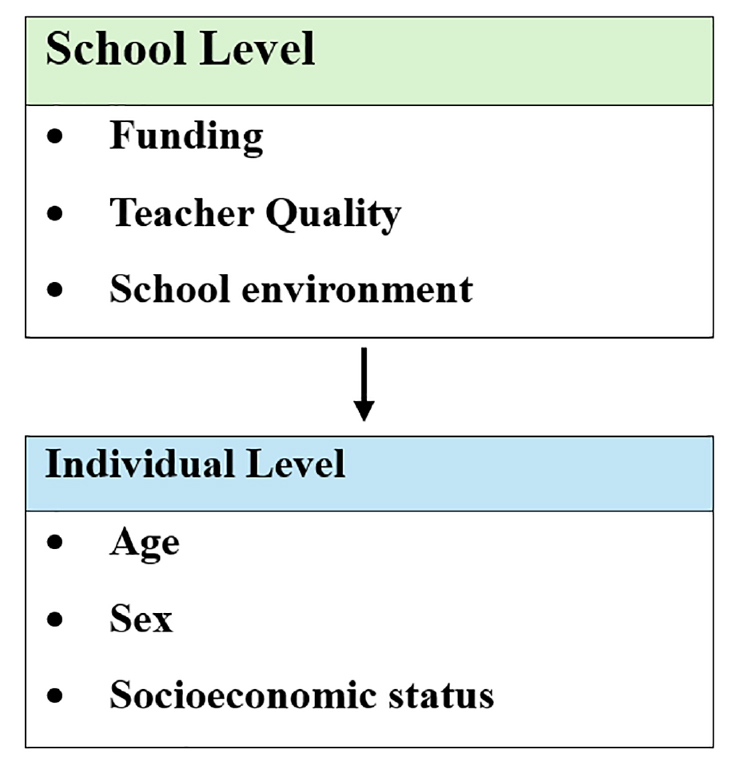
Figure 1.The figure shows an example of a multilevel model.
The term “multilevel” refers to statistical frameworks designed to analyze data with a hierarchical structure. Individual-level units (e.g., students) are nested within higher-level clusters (e.g., schools), allowing researchers to examine both within-cluster and between-cluster effects. Figure 1 illustrates this hierarchical structure.
A multilevel model assumes that data points within the same cluster are more similar to each other than to data points in other clusters. On the other hand, “multistate” models are used to analyze transitions between different discrete states over time.4 For instance, in a study tracking patients’ health outcomes over multiple stages of treatment, a multistate model would account for movements between various health states. The assumption here is that the likelihood of transitioning between states is influenced by certain covariates or factors.
Figure 2 presents an example of a multistate model, illustrating a simple framework within three discrete health states (A, B, and C). The arrows indicate the possible transitions between these states over time. In such models, individuals can move from one state to another based on transition intensities or probabilities, which may be influenced by explanatory variables. Such models are particularly useful for analyzing disease progression, treatment response, or other dynamic processes in medical research (figure 2).
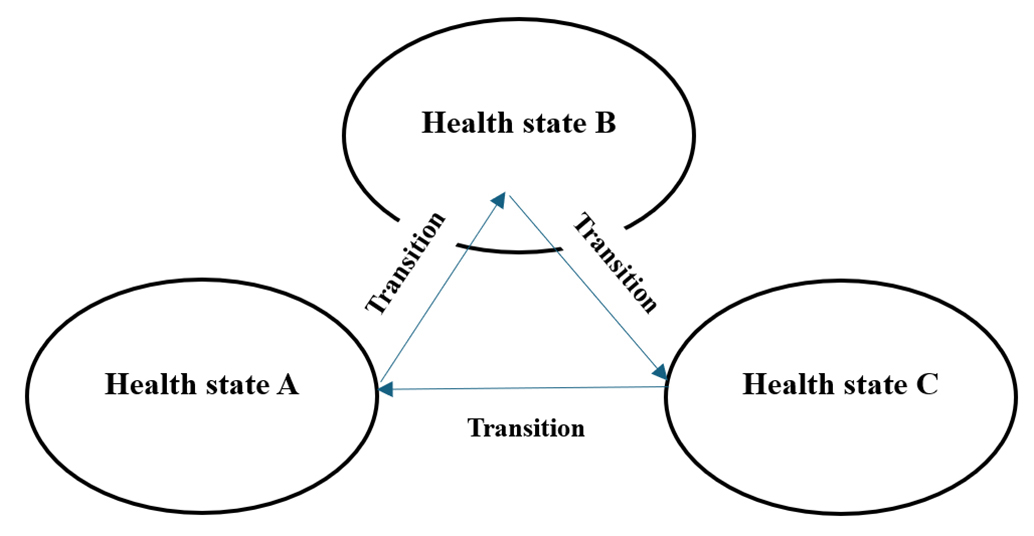
Figure 2.The figure shows an example of a multistate model.
For example, in a study tracking patients’ health outcomes across multiple treatment stages, a multistate model can analyze transitions between discrete health states—such as “healthy,” “mild illness,” and “severe illness”—allowing researchers to estimate transition probabilities over time and assess the effect of covariates on these transitions.
In statistical terminology, “multiple” typically refers to the inclusion of several predictors or independent variables within a model. This concept is particularly prominent in regression analysis, where multiple predictors collectively explain the variability observed in a dependent variable.5 For example, a study examining factors that influence patient recovery times might include multiple predictors such as age, sex, pre-existing health conditions, and treatment types. The underlying assumption of a multiple regression model is that the predictors produce proportional changes in the dependent variable.6, 7 Additionally, it is essential to ensure the absence of multicollinearity among the predictors—a condition that arises when two or more independent variables are highly correlated. Multicollinearity can distort the results, making it difficult to isolate the individual effect of each predictor on the outcome.
Figure 3 presents an example of a multiple model. This figure illustrates a framework in which several independent variables (Predictors 1–5) simultaneously contribute to explaining variation in a single dependent variable. Each arrow represents the assumed direct effect of a predictor on the outcome, highlighting the inclusion of multiple covariates within one statistical model (figure 3).
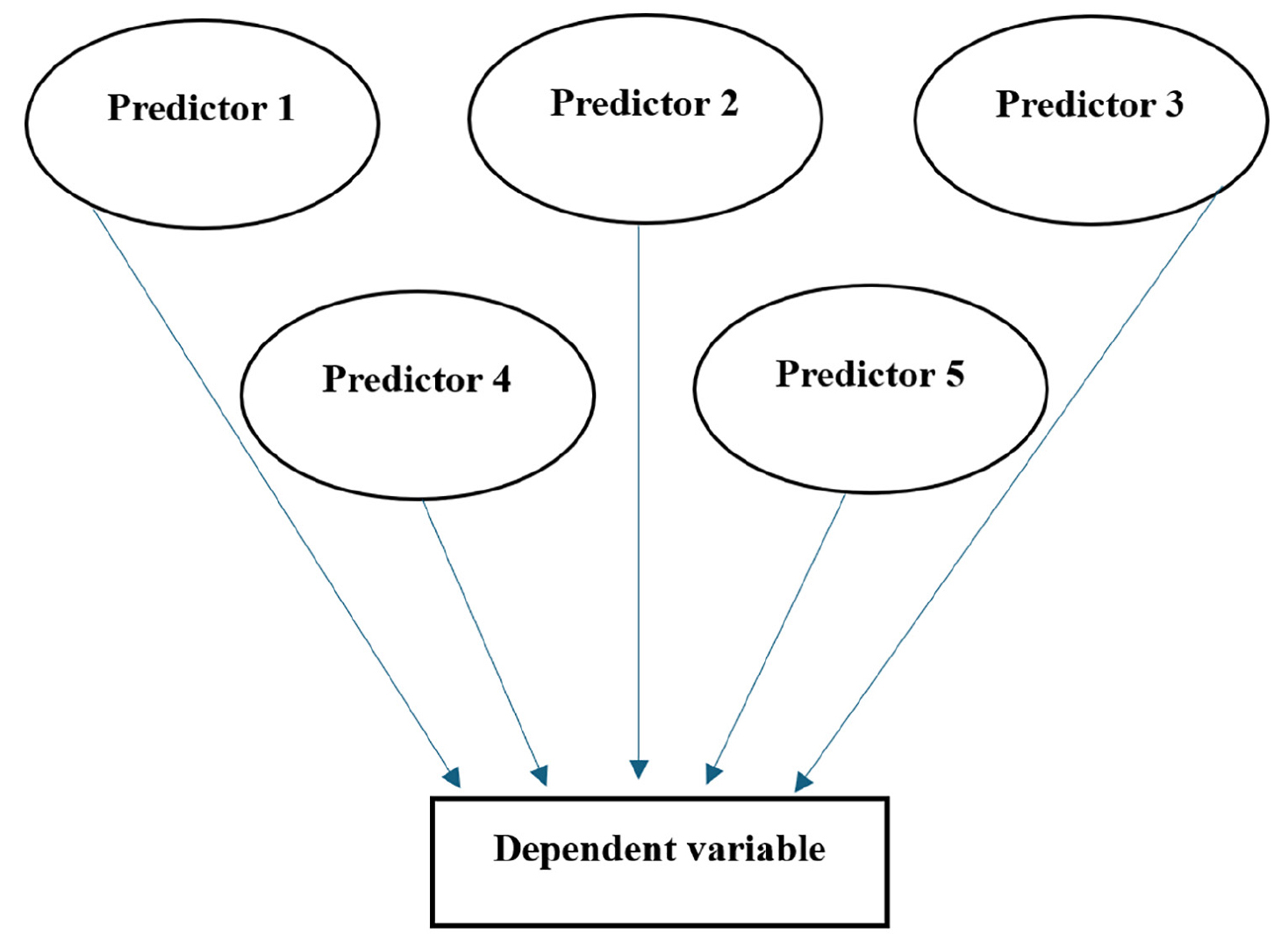
Figure 3.The figure shows an example of a multiple model.
In medical research, the terms “multilevel,” “multistate,” and “multiple” are often used interchangeably, yet they refer to fundamentally distinct concepts in both study design and interpretation. Multilevel models are appropriate from a design perspective when the research question explicitly addresses variability at multiple levels and the data are hierarchically structured (for example, patients nested within hospitals).
Multistate models, in contrast, are designed for longitudinal processes in which individuals transition between distinct states over time. However, the term “multiple” simply indicates that a statistical model includes more than one predictor and carries no implication about the underlying data structure. From an interpretation standpoint, multilevel models quantify variance components across hierarchical levels and allow for the separation of within-cluster and between-cluster effects. Multistate models yield transition probabilities or hazard rates that characterize movement between states over time. Multiple regression models, on the other hand, provide estimates of the independent relationship between each predictor and the outcome, conditional on the other variables in the model. Failing to recognize these distinctions could lead to conceptual misunderstandings, inappropriate model selection, and erroneous interpretation of findings.
Regarding statistical analysis, multilevel models commonly employ hierarchical linear or generalized linear models to partition variance across nested levels and account for intraclass correlation. Multistate models typically employ Markov or semi-Markov models to estimate transition probabilities or hazard rates between discrete states over time. Multiple regression models, in contrast, incorporate several independent variables simultaneously to estimate their independent effects on an outcome, conditional on other covariates. Clarifying these distinctions helps to delineate both the conceptual and analytical differences among the three approaches.
In conclusion, accurately distinguishing between multilevel, multistate, and multiple models is essential for robust study design and valid interpretation of results. Each term corresponds to a distinct analytical framework with specific assumptions: multilevel models account for hierarchical data structures, multistate models characterize transitions between discrete states over time, and multiple regression models evaluate the independent effects of several predictors. Misapplying these terms can lead to conceptual confusion and erroneous conclusions. Careful consideration of the research question, data structure, and underlying statistical assumptions ensures more precise, interpretable, and meaningful analyses.
Authors’ Contribution
F.M.: Contributed to conceptualization, review, project management, writing the original draft, reviewing, and editing. S.B.: Contributed to writing the original draft, reviewing, and editing.
Declaration of AI
The authors used artificial intelligence (ChatGPT) to improve the clarity and grammar of some sentences. All conceptual content and interpretation were conducted solely by the authors.
Conflict of Interest
None declared.
References
- Hox J, Moerbeek M, Van de Schoot R. Multilevel analysis: techniques and applications. New York: Routledge; 2017. DOI
- Dedrick RF, Ferron JM, Hess MR, Hogarty KY, Kromrey JD, Lang TR. Multi-level modeling: a review of methodological issues and applications. Rev Educ Res. 2009; 79:69-102. DOI
- Mathieu JE, Aguinis H, Culpepper SA, Chen G. Understanding and estimating the power to detect cross-level interaction effects in multilevel modeling. J Appl Psychol. 2012; 97:951-66. DOI | PubMed
- Cook RJ, Lawless JF. Multistate models for the analysis of life history data. Boca Raton: Chapman and Hall/CRC; 2018. DOI
- Montgomery DC, Peck EA, Vining GG. Introduction to linear regression analysis. Hoboken: John Wiley & Sons; 2021.
- Hesamian G, Akbari MG. A robust multiple regression model based on fuzzy random variables. J Comput Appl Math. 2021; 388DOI
- Uyanık GK, Güler N. A study on multiple linear regression analysis. Procedia Soc Behav Sci. 2013; 106:234-40. DOI